Communications in complex projects
Infrastructure Communications
Infrastructure and energy projects affect people, organisations and their surroundings. My experience with project communications, environmental impact assessment communications and digital projects has taught me the value of explaining technical information clearly, understanding stakeholder needs and coordinating messages across teams. My further studies in infrastructure project communications build on this practical work.
Project Communications Management

Leadership: Taking full ownership of project communications, acting as a strategic and practical co-pilot for project managers and technical teams.
Coordination: Managing communication workflows between multi-party project organizations, engineering consultants, contractors, and external agencies.
Quality & Schedules: Ensuring structured messaging, clear responsibilities, and timely publication across all channels throughout long project timelines.
Project Lifecycle Communications

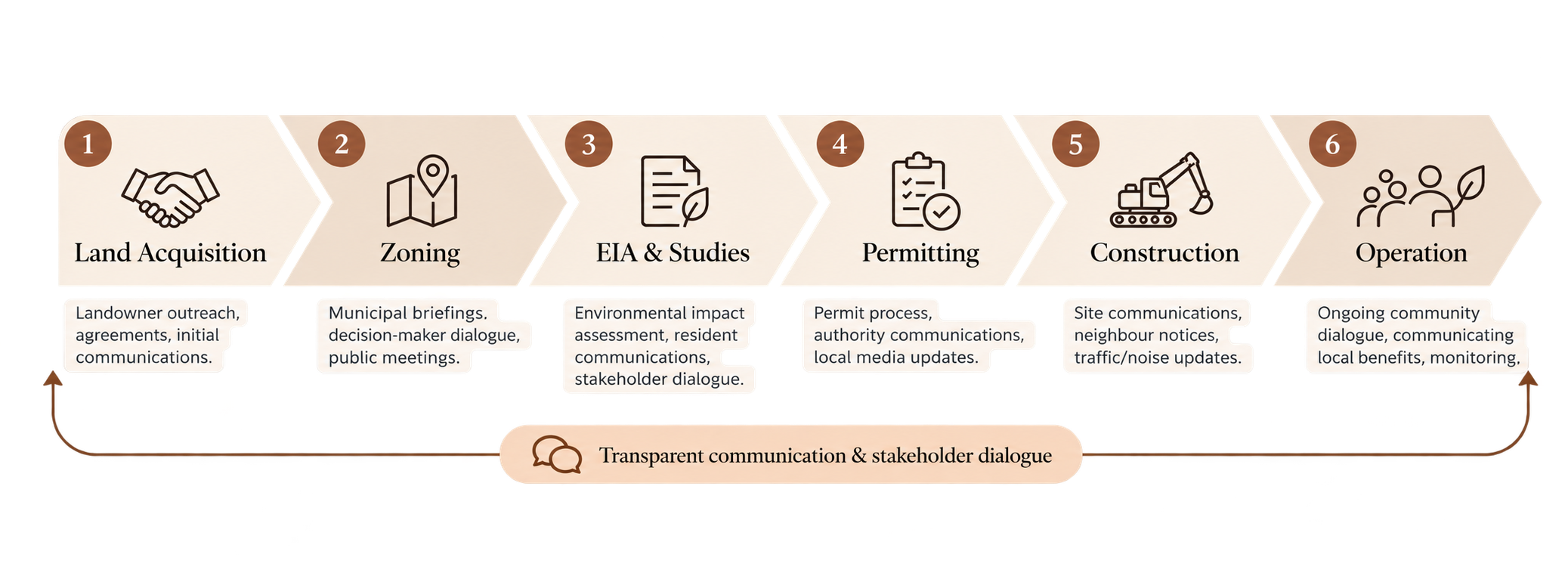
Land Acquisition: Early-stage information for landowners and local municipalities to build trust before official procedures start.
EIA & Permitting: Interactive public hearings, clear environmental impact statements, and tailored briefing materials for regional decision-makers.
Construction: On-site communications, neighborhood bulletins, and proactive notifications regarding noise or traffic disruptions.
Commissioning: Celebrating project completion, highlighting long-term regional economic benefits, and maintaining ongoing community dialogue.
Landowner & Community Engagement

Direct Contact: Personal interactions, phone calls, and joint site visits with landowners to address individual concerns respectfully.
Open Briefings: Landowner info sessions providing transparent details regarding land agreements, site access, and compensation models.
Low-Threshold Channels: Regular localized newsletters and direct contact channels for fast, accessible answers to local questions.
Municipalities & Authorities

Decision Support: Tailored briefings and background presentations for municipal councils and local committees.
Economic Impacts: Clear presentation of regional value, including local tax revenues, employment creation, and infrastructure upgrades.
Reference Visits: Arranging visits to completed infrastructure facilities and offering continuous background information for authorities.
Residents, Media & Associations

Public Dialogue: Organizing community meetings, pop-up info stands, and partnering with local village associations.
Visual Clarity: Utilizing clear visual maps, 3D renderings, and non-technical language to explain complex engineering developments.
Media Relations: Proactive collaboration with local newspapers and rapid, factual responses to prevent misinformation.
Incident Response & Preparedness

Site Incidents: Clear communication protocols and fast-response messaging for safety deviations or environmental disturbances.
Crisis Plans: Project-specific crisis communication plans, spokesperson preparation, and direct authority coordination.
Community Monitoring: Active tracking of local discussions and social media channels to address misperceptions promptly with verified facts.
Practical Communication Guides
I have created Finnish-language guides on infrastructure project communications and crisis communications as part of my work and studies. They turn demanding processes into practical guidance for planning messages, audiences and communication activities. I am also developing a guide to digital communications as I continue my studies in digital marketing.
Built on Work Experience and Continuous Learning
The guides draw on my work in different organisations, my university education in communications and later studies in project management and digital development. Their purpose is to help make complex communication work easier to plan and carry out.
If you would like to know more about the guides, please get in touch by email or LinkedIn.